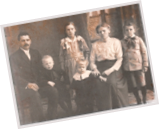

Fjeldskaar
. > go to Karen Gurine/ Johan Enok
.
Fjeldskaar

The first part of the name Fjeldskår is mountain. The last part is not that easy, as it can be both shards or shoes. The spelling has changed a great deal over time. In 1510 it was Fielskord, 1594 Fielskor, 1612 Fjellskor, 1619 Fieldschaar, 1668 Fielschår. The Fjeldskaar farm is old, but no one knows how old.


The first written sources about Fjellskaar is from 1510. (There is no indication (yet) that the involved people below, are related to our family). From [1]:
Gwdlogh Anundzsson accidentially killed Anund Torkilsson in a feast on Fjellskaar in Spangereid.
Ewind Olaffson sworn 3/6-1510 his friend Anund Torkilssons words to him before he died, that it was Gudlaug Anundsson who had inflicted Anund injuries and engage in feasting on Fjellskaar in Spangereid. Henrik Krwmmadickes fogd Svein Knutsson give message 3/6-1510 to king Christian II of the circumstances surrounding a murder on Fjellskaar in Spangereid
Thorral Gwnwlsson vitnet 3/6-1510 om at han kom til Anund Torkilsson samme dag som Anund døde etter skadene Gudlaug Anundsson hadde påført ham i gjestebud på Fjellskår i Spangereid. Denne brev viser Torllffue Gundersenn får 3/9-1510 beskjermelsesbrev av kong Christian II om at han, hans hustru, barn, tjenere og gods skal være under kongelig vern (DN II nr. 1035, Spangereid kirkegård).
Jens Henriksson, priest in Odnedal, listed as no. 1 of the three "beskjedelige menn" in the letter of the 16/5-1507. The letter discusses a jordegave of Valand in Konsmo parish in Foss, which is given by one half each to the Valle church and rectory. Mr. Jens was among those who sign the letter (DN XII no. 272, Valle, in Sør-Audnedal, no seal preserved). Mr. Jens must also be identified as the honorable one here (Lares) Henricksson priest in Øndal, 3/6-1510 are asked to put their signature below a letter that dealt with a slew of Fjellskår in Spangereid (DN II no. 1045, Spangereid cemetery).
Another feast (wedding on the Hille in Hasle):
knwdh (not specified) bottled beer in a double wedding on Hille in Halse, then the host Håkon accused him of spilling the beer on the floor. Knut was so offended that he wanted to leave together with Gro Torsteinsdotter and some other. It all evolved, however, to bickering and fighting between the host Håkon and several guests. This led accidentially to Gro Torsteinsdotter was stabbed and killed by Håkon when she tried to separate Håkon and his brother; Bjermod (Torsteinsson), from fighting (DN XXI no. 843, Spangereid). It may, according to context seem as though the Knut and Gro were closely related to each other, then Gro would go home together with Knut. They can then either have been married or closely related.

Lillehavn in the old days
Lillehavn was a central port in connection with the fishing for those who lived on the Fjeldskaar (see image below).


Spangereid – a maritime seat of power
The density of the relics is unusually large in Spangereid. Viking discoveries show that there have been connections between the Spangereid and some of the most famous places in the North of Europe. Several kings and princes are linked to local traditions in Spangereid. Both archaeology and folk tradition suggests that Spangereid was a seat of power of dimensions. In Høllen are traces of hub or retail outlet from the roman empire and the migration period
Holland
There has, over several hundred years, been lively traffic between Holland and the southernmost coast of Norway. There was a lot of trade between the two countries, and it is said that the Dutch "visited all angles and corners" and ran barter with the farmers. On an old antiquated map was Lindesnes called "The Dutch Nes". The Dutch bought lumber, lobster and salmon, and they were selling foods, ceramics, and furniture. Many older people at Lindesnes know the following expression, which was used when one wanted something: "It'll have to wait until we get to the heritage from Holland". It presupposes presumably that it really came an inheritance from Holland to the areas here.
It is said that it is Dutch blood in the veins of the Fjeldskaar family. On the basis of the above, it would not be surprising. It turns out that a few generations back in the Fjeldskaar family is ending up in Svinør, and in families Voet, Slogh and Galtrup. Svinør, a small archipelago off Åvik, was at that time a thriving island community, with a large maritime activity and people from many nations; and in particular, the Dutch. The island community had a group of gentry families; Slogh and Galtrup were among them. Erich Slogh was called "monsieur", and was a central figure on the island with its trading business. He was married to Maria Galtrup. Their daughter married Casper Anthonisen Voet.
Casper Anthonisen Voet was the son of a skipper from Bergen who died in Svinør, after a shipwreck. The skipper's named was Anthoni Voet, and was also as a merchant in Bergen. The son Casper was born in 1711, and died also on the sea (in 1768).
Anthoni Voet (the father of Casper) was the son of Geurt Voet and Lysbeth Geurts, both from Holland. Anthoni was born in Nijmegen in the Netherlands (and baptized in Nederlands Hervormde Kerk 19. July 1698). So the Fjeldskaar family really has Dutch blood in the veins (as the rumor told). But it is a while back in time.
There is more information about Svinør and the families from Svinør here.
.
.
Johan Enok's ancestors

.Anene til Johan Kornelius; design ved «FamilySearch»
.
Generations from Peder Clausen Friis to Ole Heningsen; moreover, to Johan Kornelius via Villum Johnson Flatebø (blue Color). Click to see the better resolution.


Johan Enok's siblings; from Ruth Marie Sylte's ancestral pages on Ancestry.com (she is the great-granddaughter of Anna J V Fladebø)
 For Anund-line – see here and here

From Valle church records. Ole Henningsen (my 3 times great-grandfather) born sept 1731

Ole Henningsen married Valbor Simonsdtr in 1774.
Haagen Tolliesen Eastern Gahre
"Kappskytingssteinene" on Gahre shall be memorials of bow shooting competition between the famous Olaf Trygvasson and Einar Tambarskjelve. The latter won – with a shot of over one kilometer in length!
Haagen Tolliesen Eastern Gahre (see chart above), my 6 times great-great-grandfather, was in a special trial for over 200 years ago. He was sued for the right of the Foss court in 1708 by lieutenant Hans Carstensen Gahre. Haagen was accused of having buried a goat on Hans Gahre's properties It was in itself bad enough, but it was even "a living gied". The case went on for a couple years, and it was probably a typical neighbor quarrel that lay behind. In addition, there was a hint of struggle against superstition and inherited customs from old times. Hans Carstensen was known to be a fighter, which probably did not do the case easier. It is unclear how the case was settled, but it seems that it was transferred to the ecclesiastical law. See details here.
I have included some relevant excerpts from the church records here.


Shift Sommund Eriksen (Gauksum) and Haagen Tollefsen (Gahre); both of my 6 times great-great-oldefedre.
.
Flatebø
Flatebø is indeed the most central place for the Fjeldskaar family; more central than the place Fjeldskaar (optional. Fjellskår). Johan Enok Villumsen Fjeldskaar and Johan Kornelius Fjeldskaar lived on Fjeldskaar, but none of our ancestors were born on Fjeldskaar. On Flatebø, however, many of our ancestors saw the light of day. The first was probably Joen Joensen, my 3 times great-great-great-grandfather.

At the first census in Norway (1801), we find our relative Joen Joensen. He belonged to one of the 2 families on Flatebø. He was then 53 years old, and was married to Anna Tønnesdtr, who was 60 years old. It is not quite certainly that Joen was born on Flatebø, but both his son, grandson, great-grandson (Johan Enok) and his grandson's grandson (Johan Kornelius) was born there. Johan Enok's mother (Sille Thomine Petersdtr) also came from the Flatebø – according to the church records she had a place of residence Fladebø when she was baptized.
Karen Gurine died on Flatebø in 1888. Johan Enok lived on Flatebø in 1889 (according to the Cadastre), and he lived there when he married his 2. wife, Teodine Emilie Tørresdtr (1892), while he did not live there during the census in 1900, when they had moved to Fjeldskaar. He got the deed of the property on the Fjeldskaar in 1891 (see below).

.

Flatebø. Blue square shows the the farm of Johan Enok. It is now (July 2006), only four farms on Flatebø, but only one in operation. It is our genealogy-farm (see photo aerial view from 1961 below).
.

From the census in 1865. We see the family of Vellem Johnsen; Johan Enok was then 12 years
.


Photos from Gauksum, Gahre, Flatebø (g.no. 160, b (5), Jørgenstad and Ramsland, all central place names in our family.

Fjeldskaar-farm (Gnr 162, Bnr 6; blue square)

.

.
.
Karen Gurine's ancestors
.
 .
.
.

Imsøy – with the farm of Bernt E. Christensen (gårdsnr 139, bnr 2) in the blue square
.
 [2]
[2]
.
.


Karen Gurine was born 4. February 1855


As we see above, Karen Gurine's grandfather, Christen Bærentsen Gitlevaag, was farmer and teacher. He was the teacher in Spangereid sogn from 1794 to 1816. More about him in the paragraph about School.
Gitlevåg
Bærent Hansen Gitlevaag was born on the Gitlevåg in 1754. In 1776, he married Ester Thorsdatter Reiåsen, b. 1757 on the Gitlestein. They got the kids Christen (1777), Maria (1785) and Hans (1789).
Bærent bought Bærteigen in 1783 at an auction after Todne Mikkelsdtr for 160 riksdaler. In 1801 Bernt and his family lived here, together with his son, Christen and his wife. Christen was a farmer and teacher; he was the teacher in Spangereid from 1794 to 1829. Anna Kristine Pedersdtr was a servant in the house – only 8 years old. She was possibly the sister of the wife in the house.
Christen married in 1796 with the Else Martea Pederstdtr lower Njerve (born 1774). They later moved to Njerve, where Bernt was born (1818). Bærent Hansen deed Bærteigen in 1823 to his grandson Bill for 160 specidaler. But first lived, however, sally's sister on Bærteigen. Bernt married in 1848 with Martine Christoffersdtr Imsa (f. 1826). They lived for a little while Njerve, before they moved to the Gitlevåg in 1849. Here they lived until they, at the end of the 1850s, moved to Imsa. In 1858, he sold the Bærteigen for 300 specidaler. The house is used now as the summer retreat.


To the left: Gitlevåg in the background, Bærteigen is the house to the right. On the image to the right we see the house on Bærteigen; the family in the foreground is the later owners of the house.

Bærteigen anno 2006


Tosten and Ranni got the daugther Ingeborg in 1837, Inger Marie in 1838 and Olene in 1840; all born in Vigmostad.
.
.
.
References
[1] Folk på Agder 1500-1560 av Per Reidar Christiansen
[2] Spangereid : folk i bygda gjennom tidene : (1600-1900). 2 av Olav Njerve
[3] Glimt fra Lindesnes, 1985
……………………………………………………………………………………


 English
  Norsk bokmål